

“From Steam to Shared Loops: Model-Based Design for Thermal Energy Networks” with Dr. Kathryn Hinkelman, Assistant Professor of Civil and Environmental Engineering, University of Vermont
District energy systems have heated and cooled campuses, hospitals, and downtowns for more than a century and remain vital infrastructure today. Meanwhile, thermal energy networks are emerging that share heat among buildings, recover waste heat, and connect communities with renewable thermal resources such as the ground, lakes, wastewater, and data centers. This presentation traces district heating and cooling from steam, hot-water, and chilled-water systems to ambient-loop thermal energy networks, highlighting key design choices, including geothermal configurations and network topologies. It then shows how model-based systems engineering with open-source Modelica tools helps engineers validate designs, evaluate retrofits, and reduce project risks before construction. Examples include a campus district cooling plant, steam heating systems, and geothermal reservoir networks. The talk concludes with current activities of ASHRAE TC 6.2 District Energy and opportunities for practitioners to help shape the future of community-scale thermal infrastructure.
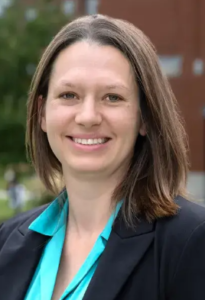
Kathryn Hinkelman is an Assistant Professor of Civil and Environmental Engineering at the University of Vermont, where she develops model-based design and simulation methods for next-generation energy systems that connect buildings, communities, and environmental resources. An ASHRAE member since 2017, she serves as Research Subcommittee Co-Chair and Webmaster of TC 6.2 District Energy and contributes to Lawrence Berkeley National Laboratory’s Modelica Buildings Library, one of the most widely used open-source platforms for building and district energy simulation. Prior to joining academia, she worked as a consulting engineer designing MEP systems for commercial and multifamily buildings. She holds a Ph.D. in Architectural Engineering from Penn State and degrees in Mechanical Engineering from UC Berkeley and the University of Denver, and was named the 2026 Vermont Young Engineer of the Year.
Schedule
5:30 – Social Hour
6-6:15 – Announcements followed by dinner
6:30 – Presentation
RSVP and pay here – RSVP